Showing posts with label television. Show all posts

Thursday, June 9, 2011

Telly Finales: Which Got It Right and Which Got It Less-Right

Finales are tricky things.

Hell. Writing in general is tricky.

But I think finales are particularly important. They should tease a person. They should force the viewer to anticipate the return.

They should, in fact, torture a person with the agony of wondering what happens next.

Unfortunately, shows tend to have a very narrow definition of what it takes to get the audience to that hunger.

It's not surprising -- narrow is "safe" and "safe" usually means more money.

It's a difficult tension that telly has to navigate. But really good telly navigates it well.

Like in crafting a story in general, there are two broad elements that can drive a finale: plot and character. I prefer character stories myself because I find them to be more substantive, but as with all things, whatever floats your boat. I'll be looking at the finales from both of these elements.

I only have a few television shows I watch regularly (or somewhat regularly -- SGU pissed me off to no end with it's non-hulu streaming and then the crappy quality on its site, I just waited for netflix to stream it and finished watching it today, so I know I'm way behind on the real finales).

So here we go:

Glee

Glee is a guilty pleasure of mine even though I think the show has its issues. However, looking at it from a strictly craft perspective, I have to say that Glee's finale failed as a finale. It didn't rip my heart a new one (like another did), and that was nice not having to pick up the pieces (again), but even happy-ish finales can still produce that hunger for more. And Glee still failed in that regard.

The lack of character development really crippled the ability for Glee to craft a story that would make an audience hunger for what happens next (obviously, it makes the audience want more, but that's a different sort of want -- it's more of a this-is-tasty-let's-have-some-more, not an agony, I guess).

So, even though people are saying "i love you" and characters are suddenly together that never had any real chemistry before just becomes part of the normal scenery that Glee is in the habit of lobbing at the viewer. Basically, there is no resonance (well, for me, obviously) between myself and the people on the screen. I am not emotionally attached to people (well, except for Kurt), so at the finale ends, I'm not really hurting that I won't be seeing these characters for a few months.

Therefore there is no agony regarding the welfare of these people either on a plot or emotional level. Character development stalled out long before season 1 even finished its run -- I see no reason why season 3 should change its tune now (so that even rules out hope for something new). I fully expect to see the same melodrama in different clothes spun out in season 3 that was rehashed in season 2 and trotted out in season 1.

But it'll be done in song, so it'll be worth it.

Even the plot wasn't all that surprising. They couldn't win nationals because then there wouldn't be plot stakes for season 3. And, because there are only so many plots available to a high school glee club, there isn't really a lot of ground that hasn't been covered.

Unless they do something daring and surprising in which case -- more power to them!

Castle

I lurve Castle in the same way I lurve me some pie. Which is, I'm fond of pie. But I'm not like Dean-Winchester-in-Love-with-Pie.

I can survive without pie.

Castle is one of the more fun procedural shows (which I generally despise) for me to watch. But unfortunately, there isn't a lot of character development that goes on. So, the finale fell back on plot -- oh, no! Beckett's been shot!

But really, the viewer can't really feel anxious about her welfare because the chances that she'll live are high -- if she were to die, the atmosphere of the show would be drastically changed. The tenor would be different.

It would be a huge risk to kill off Beckett -- and if next season takes it, good for them.

But Castle plays it safe. So, even though I'm looking forward to its return, I'm not agonizing over it. The only real stake is if Beckett Will Live Or Die -- and as I've already explained, it's not much of a stake.

Bones

For procedural shows I supposedly hate, I seem to watch a few of them, don't I?

I haven't really cared much for this season of Bones -- I'm not sure why. Something's missing. But the finale bugged me -- Angela had her baby, Booth and Bones dressed up as these ridiculous characters undercover, and then Bones ends up telling Booth that she's pregnant.

It's probably just my thing against pregnancy story lines. But just for the record, I find it out of character that Bones wasn't on birth control.

I'm not really sure what the stakes are supposed to be here -- how Bones' and Booth's relationship will develop? I feel like this question has posed before though.

Anyway, the episode itself was meh. The question it poses is meh and a bit stale.

Fringe

Oh Fringe. You know I love you. Fringe had a good season finale I thought -- it opened up new avenues of tension that hadn't been able to be explored before because of how the universes were so separated. But now they're not. That opens up a whole new world of conflict. So that's good--that's always good.

But then they made a mistake (I think from a craft perspective) of erasing Peter's character (I haven't kept up with the spoilers, but I'm assuming he's coming back?). But even if the character does return, taking him away essentially "reset" a lot of character development, especially in the case of Olivia.

So she used to be hard and emotionally closed off, but Peter helped break her out of that. Without Peter in her life, logically, her character should be reset to Pre-Peter.

If it's not reset, then there's issues with the plot and the rules its established. And that's never fun.

SGU

SGU had so much potential. And even though I wanted to shake their shoulders over the "Epilogue" episode (where their Other!Selves established a colonization) because they still had the girls in pioneering skirts instead of pants (they were wearing pants on the ship! why would they revert to wearing skirts when that's less practical -- so fucking gendered) and for not showing Ray's date (even though showed whom everyone else ended up with -- I don't care that Ray never got together with anyone but I do want to know who the mysterious "she" was) and for that terrible montage of women giving birth -- alkjadsfkldfsa.

deep breath.

SGU had its flaws.

But it had a beautiful finale. I'm going to classify it as happy, simply because it didn't make me want to pick up the pieces of my heart (again).

The plot is relatively simple -- if it had been renewed it would have opened up opportunities for new tensions, just as with Fringe. So, plot-wise, strong.

Its real strength, though, were its character moments. Eli comes into his own. And it's so beautiful the newfound confidence he has. And, as I was watching it (I hadn't realized I was on the last episode since I had lost count), I couldn't wait to see how his development would affect the other characters around him.

How would he handle himself when he exited the honey-moon period of newfound confidence? Would he regress? Would he change into something new, something great, something dangerous? Could he eventually replace Young as the captain of the ship? How would he and Rush get along? Sure, Rush seems okay with it for now, but there's nothing he can do about it, not when they have to make it for three years.

Oh, and yeah, plot question here -- does Eli survive? Does he manage to fix the pod? If he didn't, would he have had the courage to kill himself?

These are all questions I want answered.

And I will never get them answered because the finale ended on that final moment of endless possibility.

It torture knowing that I'll never see those possibilities explored.

And yes, this is probably the most surprising of the finales. When I was watching the season, I saw its potential, I saw it finding its feet, but I wasn't expecting the quality that the finale delivered.

It was a pleasant surprise.

Supernatural

The other finales focused on Sam and Dean which, despite my love for Supernatural, was a bit "safe." I mean, the show is about Sam and Dean. No matter what, they're going to pull through all right -- physically and characteristically speaking (not that I find the soulless!Sam plot a waste of time, all these moments of exploration are good too, but they provide different kinds of satisfaction than what a finale should provide, I think).

So focusing their what-happens-now moment on the third character that has grown by leaps and bounds and is positively one of the most beautiful and purest characters in the history of the show was a brilliant move, craft-wise.

Story-wise, it just broke my heart to fucking pieces.

I like the shift from "what-will-happen-to-Sam-and-Dean" to "what-will-happen-to-the-state-of-Cas's-character?" because there are real stakes there.

And it just seems to escalate, even though I'm trying not to take whatever I hear too seriously. Knowing that Cas was supposed to die at the end of season 6, knowing that Collins has been demoted from regular to guest just increases the anticipation.

Especially since the stakes are actually two-fold:

will Castiel die either as the Big Bad or in some other fashion early in the season?

and, the more important one to me,

will Castiel be redeemed in character whether or not he dies physically?

And that's torture.

So even though the finale just pounded me bloody (and it's still bleeding my heart, I think about Supernatural all the time), I think it was a really good move from a craft perspective.

The agony of not knowing whether Castiel will survive in tact (character wise, especially) is almost overwhelming for me.

And then of course, this question also affects the show's core too: how will it affect Dean's relationship with Cas -- and even Sam's, to an extent. Because he just stabbed the person he said he'd die for -- doing that does things to a person.

Then of course, there's also the plot element of the wall in Sam's brain being removed, and how he's gonna deal with that trauma.

Yeah. Having Cas become God is serving double and triple duty all connected to plot and character elements that are just pregnant with possibility.

I just hope they succeed in following it up and choose not to retreat into "safe and easy" territory. Which I don't think they will, it just wouldn't make sense from a craft perspective, but hey. Shit happens all the time.

Sunday, June 5, 2011

Doctor Who: The Story That Almost Was

So I just finished watching "The Almost People." I know this must disqualify me from being a true fan, but ever since my publishing class, I'm reluctant to download something illegally.

No wait.

That bit's a lie to make me seem more respectable.

I actually just got tired of seeing my favorite telly cancelled for lack of viewership.

So I try to keep it all right and proper, straight and narrow, all on the level, as they say.

So, in general, I don't like reviewing double-parters (or, as in this instance, tri-parters) -- because it's just not fair to judge something without all the facts.

But I have to say, this arc with The Gangers -- just did not do it for me.

At all.

Character development was so, so shoddy. First Jen (both flesh and genetic) is a sweet girl, and then she turns into a genocidal maniac. Then into a weird, creepy-ass spider thing?

I don't know. It was like. Nuance is too hard! Let's go for monstrous instead!


Just. No.

That was boring.

And then don't even get me started on Miranda.

It's so boring having all these people yelling for someone to die. I mean, I know it happens in real life all the time, but story-telling is a chance to really delve and see why people get all rabid at the mouth for a good old fashioned genocide in the park.

And then her random change of heart? Because she's dying from a clot?

Say what?

So. Let's talk about Amy.

Amy. The Almost Person.

But, the entire episode has been about how the Almost People are actually People.

So -- why did the Doctor disintegrate her?

And the look on her face when Rory leaves her. That was. Heartbreaking.

And it seemed so unlike Rory to leave Amy -- flesh or genetic. I just.

Hmmmm.

That bothered me. It really, really bothered me.

And I'm trying to figure out how the Silence fit into everything -- but maybe that'll be explained in the finale. Which, yes, I'm waiting a week unless my will crumbles.

But, right now, I just can't help but wonder if Moffat has stumbled into a classic story-crafting blunder:

Trying to be astonishing in all the wrong ways.

Finding out that someone isn't who you thought they were isn't astonishing.

People encounter that every day of their lives.

And, I'm sorry, but the main anxiety regarding The Gangers wasn't moralistic -- wasn't, who's more human, who's more of a person -- it was

Who gets to be the boy's father?

Now, good fiction doesn't attempt to answer hard questions. It just proposes them.

Doctor Who answered that question by tidying everything up all nice and pretty. Gangers and humans survive --

but there is not a double to be seen to ask that terrible question because Jimmy and Miranda and the other one are dead, they're all dead.

And the Doctor destroys Amelia Pond, the Flesh.

There will be no one asking:

Who is the baby's mother -- and wouldn't that have been interesting, Amelia Pond, pregnant and not pregnant on the deck of the TARDIS, experiencing the labor and pain of birthing a baby she doesn't even have in her womb --

Who is the Doctor's companion --

Who is Rory's partner --

because she's gone.

And so, I am disappointed.

But not with Matt Smith. Because he bouncing back between Time Lord and Flesh was fantastic.

Monday, April 18, 2011

Regarding Game of Thrones (spoilers)

So I thought that the first episode of Game of Thrones (which I watched on youtube) was mostly good.

Except for one part which I find really, intensely irritating.

It was after Dany weds Khal Drogo and they go on their ride, which preludes their sexual intimacy. Well, if it can be called intimacy.

It sucks being a wife/female and all in Westeros, we'll put it that way. And because of that, it just makes what the writers' change all the worse, in my opinion.

Here's the scene in the book (though they skipped the part where Dany unbraids his hair):

He began to undress her.

His fingers were deft and strangely tender. He removed her silks one by one, carefully, while Dany sat unmoving, silent, looking at his eyes. When he bared her small breasts, she could not help herself. She averted her eyes and covered herself with her hands. "No," Drogo said. He pulled her hands away from her breasts, gently but firmly, then lifted her face again to make her look at him. "No," he repeated.

"No," she echoed back at him.

[. . .]

After a while he began to touch her. Lightly at first, then harder. She could sense the fierce strength in his hands, but he never hurt her. He held her hand in his own and brushed her fingers, one by one. He ran a hand gently down her leg. He stroked her face, tracing the curve of her ears, running a finger gently around her mouth. He put both hands in her hair and combed it with his fingers. He turned her around, massaged her shoulders, slid a knuckle down the path of her spine.

It seemed as if hours passed before his hands finally went to her breasts. He stroked the soft skin underneath until it tingled. He circled her nipples with his thumbs, pinched them between thumb and forefinger, then began to pull at her, very lightly at first, then more insistently, until her nipples stiffened and began to ache.

He stopped then, and drew her down onto his lap. Dany was flushed and breathless, her heart fluttering in her chest. He cupped her face in his huge hands and looked into her eyes. "No?" he said, and she knew it was a question.

She took his hand and moved it down to the wetness between her thighs. "Yes," she whispered as she put his finger inside her.


In the television version, Drogo skips the foreplay, never asks her permission, and, most importantly, Dany's agency is never acknowledged in the HBO version when she says yes.

I find this very problematic for me on all sorts of levels.

1. It completely removes Drogo's complexity. In the telly version, he's just a stereotypical savage who wants what's "his." He just takes off her clothes and bends her over. He's just a type--and a really harmful cultural stereotype at that, too.

2. I don't really understand why they toned down the brother's physical abusiveness (pinching her nipple, primarily) -- though, in fairness, they did get the emotional abuse spot on -- and increased Drogo's. I just think that there was a difference between the two in how they treated Dany as a sexual woman, and that the Writers-that-Be completely removed the difference by not showing the rest of the scene.

3. Dany is so awesome. None of her dialogue should be removed -- ever! (I'm only half-serious, but they really shouldn't have axed the "yes," imo).

Everything else was amazing. I love the guy who plays Jaime -- the look on his face at the end, when Bran discovers them. It's not really until later in the series that Jaime becomes one of my favorite characters because, in Game of Thrones, you don't really see his complexity. But here -- with a real actor being able to show it, without the filter of a little child's eyes, you see it plain as day. And that's beautiful.

They covered a lot of ground in a short while. Dany's final scene with Drogo (grumble grumble) is on page 85 of my book and the closing scene with Bran is on page 71.

One more caveat -- Robb? Theon Greyjoy? I'm not sure if Greyjoy made an appearance, but I think the guy who plays Robb (who I think is Robb?) would make a better Greyjoy. I never pictured Robb as being so douchey.

Friday, April 15, 2011

Supernatural First Impressions

Supernatural "My Heart Will Go On" (6.17): Spoilery

I heard that this episode had Fate in it. And I was really dreading it because one of the things I like about Supernatural is that it's very gung-ho about free will and giving Destiny the bird and what-not. And when I heard "Fate" I translated it as a personification of the fate that we see in texts like Beowulf, etc. So I was very much leery of the idea, to say the least.

But I was wrong! It was the Greek goddesses of Fate, which was a huge relief. And it renewed my appreciation for how well Supernatural navigates the tension between fate and free will because it's a rather nuanced idea that flicks like Star Wars always failed to properly explore.

Also -- Fate was a badass. Not only was her librarian look super hot, but she was a strong female character -- which Supernatural, despite it's otherwise awesomeness -- rather lacks (since we're talking about strong female characters, it was nice to see Ellen and to hear that Jo was off being an awesome hunter).

I really loved how Fate called Castiel out on the carpet. I thought she was complex -- she's angry that the world is suddenly a chaotic-topsy-turvy mess more so than usual, she's angry that she's lost her job--that the rug's been pulled out from under her feet, and she's angry that Castiel has been abusing angel privileges and saving boat-loads of people to fund his angelic civil war. And instead of wringing her hands, she goes through the proper channels, and then when that fails, does something about it. Very cool.

And you know, since we're talking about gender (I know, it's all I can think about these days--hopefully that part will get turned off soon, it gets a little exhausting sometimes), I really liked how the show sort of played with some stereotypes that are so commonly applied to women:

Don't be so emotional, Castiel tells her. You're confused. And the show subverts that by really playing off the different emotional dynamics at work here -- both the individual ones and the cosmically broad ones.

Sometimes I think the problem with shows is that they go too far in a polarized direction: either a woman is a stereotype in that she's passive or what not, or she's either the kick ass standard bearer that says This Show Believes in Feminism Because Look At How Macho This Woman Is. And so I liked that Supernatural did have her being emotional and reasonable at the same time. It was realistic and three dimensional and awesome.

And, if we're talking about three dimensional characters: Castiel.

I think it takes guts to take a fan favorite and to put him in circumstances where his motivations and desires will, perhaps, conflict with what made him so lovable in the first place. In Season 4, he was heaven's bitch, just accepting what he was told. In Season 5, Sam and Dean showed him what it meant to be human. But then he got put in charge of heaven and now he has some serious decisions to make. And he has conflicting motivations, and he must choose, and instead of doing the right thing, he tries to have his cake and eat it too (I couldn't help but think that his little speech to the boys about how they taught him about freedom etc. was sort of preluding a course of action that he knows they probably won't agree with in a future episode).

I love how palpable his shame is: even as he's denying Fate's accusations about his motivations for saving the Titanic, you can just see it (and he's obviously not used to lying, that's so adorable and beautiful and simultaneously sad that he's learning how to -- especially in context of that one episode where he asked Dean why people lie). And, even though he stopped Balthazar when she threatened to have Dean and Sam killed, I can't help but think that it was also because he knew she was right.

And then of course, he lies to Sam and Dean, covering for himself, blaming Fate because he's not brave enough to blame himself.

I can't say I'm thrilled with the direction that Castiel is being taken from a personal, squeeing fangirl point of view, but I have to say that, as a writer, I really respect the show for not keeping Castiel as Sam and Dean's backseat angel buddy. I feel like there are high stakes for the character, like the show is taking the opportunity to explore more of his character to make him round and full and real, and it just thrills me.

Sunday, April 10, 2011

Gender Alert: Mad Men

In the fourth season of Mad Men, the second episode "Christmas Comes But Once a Year" has a mini-arc involving Peggy in which she must decide whether she wants to accept or reject the advances of her current boyfriend, who wishes to have sex with her.

He says to her that he wants to be her first--and she does not correct his assumption that she is a virgin (though the first season established her fling with Pete and the subsequent child, along with exploring tensions between her choice as a career woman vs. a mother).

The reason I mention it is because my human sexuality class recently had a superficial discussion regarding virginity (superficial because the class is one hundred plus people and we were already behind). Needless to say, the topic was rather hot and controversial, but it came about that it is still popular for women to be less than truthful about how many people they've slept with or simply outright saying they are still virgins, even if it's not so.

I find it sad that we are in such similar circumstances where women are forced to censure themselves simply because of how they will subsequently be viewed by society (indeed, I find even the idea of "virginity" to be a relic of an ignorant past and best to be abandoned entirely).

There is, in fact, no winning in this kind of situation. For Peggy, she is objectified no matter what she chooses. Because the boyfriend wants to be her first--whether as a status claim or "to take her" is not entirely clear through the course of the episode, but I can't help but think it's one or both of those motivations--he objectifies her from a person to a thing of conquest.

If she corrects his assumptions (assumptions which limit her sexuality is an individual), then she will be labeled a slut or a whore--denigrating terms in and of themselves.

Obviously the issues aren't so strong today, but they are still present.

That's really one of the reasons I like Peggy so much--it's fascinating to watch her (and Joan) navigate these power structures so deftly.

Speaking of Joan, I rather loved her scene in "The Good News" when, after she receives flowers from Lane, she storms into his office, confronting him about he has infantalized her, making her feel like a "helpless little girl." Of course, it was a result of a mix-up in flowers, but that her beliefs regarding Lane's motivations were even an option reveal the sort of disrespect she has to navigate on a daily basis.

Saturday, March 19, 2011

Fringe: The Tragedy of Agent Farnsworth


Last night's Fringe reminded me of how little the show views Astrid not only as a character, but as a person.

Astrid has always been one of my favorite characters, and I hate how she is often delegated to the role of Walter's caretaker. This is always niggling at me -- for example, in a past episode when Walter is beginning to realize that the fabric of the universe is beginning to unravel on Our Side, he asks why people aren't fetching the stuff that he requires. Peter and Olivia are both there, but it's Astrid who must go and fetch it.

It's Astrid who has to cater to Walter's (very adorkable, mind you) whims. It's Astrid who has to clean up the messes.

It's Astrid who's delegated to doing every Uncool Thing in the Fringe Division.

And that's just sad.

In this latest episode ("Stowaway"), Bellivia nicely illustrates how insignificant the scientific patriarchs view Astrid, despite her oft-stated intellect (particularly her linguistic abilities).

Bellivia hits on Astrid so often that she's forced to button the top of her blouse to alleviate the discomfort of his advances. And though it's clearly shown as (humorously) inappropriate, I feel that it opened larger issues that the show must at some point address because the exchanges between Bellivia and Walter demonstrate not only why but how the show needs to revise the way it is currently portraying Astrid.

I don't mind that William Bell is a misogynist asshole. Flaws assist in making characters three dimensional after all. On a character level, I didn't even mind when Walter and Bellie were considering putting Bell's consciousness in the cow and William says, "But I'd have to milk you." And Bell returns with the idea of assigning Astrid to do it.

First, it shows an anxiety on the males' side about same-sex touching in a sexualized context (because I doubt most people would view milking a cow as sexual if the breasts/nipples weren't involved in the context of body-hopping). This actually reminds me how few heterosexual men consider their own breasts as erotic, and how homosexual male couples are more likely to foreplay with each other's breasts than straight couples are -- possibly because heterosexual males find it to be effeminate (this from my human sexuality course).

This sexual-orientation anxiety is combined with the long history of milkmaids, which is of course (obviously) usually seen as a female occupation.

So in that brief exchange, there's anxiety regarding both gender and sexuality.

But this is okay - it's human to be anxious about such things.

What is not okay is that the show has not provided the same privilege to Astrid. If they were to assign her to milk Gene-as-Bellie, I can't imagine her saying no -- because she has never been given the opportunity to assert her agency and say no to being Walter's caretaker -- even when it has caused her physical harm as it did in Season 2.

That's all she /is/ in the show: Walter's babysitter. The show never shows any other side to her -- leaving such character developments to the imagination of disgruntled viewers.

Simply put, her agency is in question because she's never been allowed to express it.

So, when you have an exchange like the one between William Bell and Walter, it frustrates me not because they're being assholes, but because the show is not actively rebutting them by showing the audience that Astrid is more than how they are denigrating her.

If anything, the show is reinforcing the way these men view Astrid by only showing her in that minimizing, de-personifying context.

And that I find inexcusable.

I had hopes that the Alternate Universe would provide a more complex, nuanced view of Astrid, but so far, I am still disappointed. Instead of a handmaid, Astrid serves the role of a biological computer (though I do treasure moments when the show allows glimpses of her that reveal her to be more -- such as when she suggested the Fringe Division put out a request for people to call regarding information about a certain something or other -- but even that was more in her facial expression and tone than by the dialogue itself -- and that is a testament to Jasika Nicole's sorely underused acting abilities).

I know that part of the reason Alternate Astrid is so detached and distant is because in that universe she has aspurgers -- but even people who have autism are still complex individuals. I desperately desire that the show will portray either Astrids' complexities in a meaningful, significant fashion.

I think an opportunity was lost when Fauxlivia was posing as Olivia on Our Side. She's meets Our Astrid, who is so different from the Other Astrid -- and yet, the show doesn't even explore how Fauxlivia would react to that. Instead, we get a typical male-female romance between the leads complete with a plot deviced pregnancy instead an exploration of female-female friendship in a context that would have been amazing and significant.

How would have Fauxlivia reacted to our Astrid? How would Astrid react to the possibility of a reaction with Whom-She-Thinks-Is-Olivia-But-Is-Actually-Fauxlivia? How would she have reacted when this Olivia, whom is so much friendlier and open than the Olivia once knew, turned out to Feauxlivia? How would that have affected her friendship with Olivia when Olivia returned? Does Astrid prefer to Olivia or Fauxlivia?

The viewers don't know -- it's almost as if Astrid's relationship with Dunham doesn't matter if it's Fauxlivia or Olivia -- and that is unrealistic! It just is.

A wonderful, unique opportunity that lost out to the typical triangular romance that viewers have already seen a thousand other times and that I of which am most heartily weary.

I heard rumors that there is an upcoming episode that will be Astrid-centric: basically, everyone else is otherwise incapacitated, and she will save the day.

I hope these rumors are true, and I look forward to that episode because seriously. It's been three seasons. And she's the only main character who has not had any character growth.

It's a travesty, is what it is.

Thursday, February 24, 2011

Pregnancy on Fringe: Tash Take It


The top two reasons I find Faux-livia's pregnancy to be epic fail:

1. Birth Control


What agent worth her salt doesn't have birth control? Especially if this agent already has a fairly good sex life with a respectable partner? Especially if she had no immediate plans to become a mother?

But even barring that - if she's on assignment to get cozy with the enemy on the other side, why the hell would she want to risk having a child with someone who was, at first anyway, an assignment? And even if she did actually fall in love with Peter, why would she go off birth control?

It just irritates me that in a fantastic (in both meanings of the word) show where science reigns and weird creepy stuff is per the norm, the very idea of "birth control" seems like an absolutely foreign idea that is totally unaddressed. And that is just - unbelievable.

2. Abortion?

I'm pro-choice. I believe that if a woman finds herself pregnant then she should have all options available to her whether that means keeping it or aborting it.

And it peeves me the hell off that nobody even mentioned abortion. Don't get me wrong, I do appreciate the elevated levels of Pure Creepy-Crawly-Skeeviness when Walternate was essentially seeing Faux-livia as a pod-mom for his future grandchild (making her officially part of the Bishop family and blah), but that no one mentioned it? That they didn't depict Faux-livia at least making a decision one way or the other instead of passively accepting what happened?

Unfreakingbelievable.

I understand that there is a lot of controversy over abortion that a network trying to make a profit would be reluctant to bring up. But the fact is, abortion does exist - has existed. To not even bring it up is a gross error that ruins the authenticity of the narrative.

I personally believe that abortion is not the first choice - that it would be better not to get pregnant at all. Which is why it irritates me that in the mainstream/networked shows like Fringe, they show people having willy-nilly unprotected sex.

Sometimes a show (not Fringe in this case) might depict a used condom, but the connotation always seems negative to me because they're usually found in parking lots or skeevy hotels where shame seems to be the message instead of safe and responsible sex.

However, I still can't think of a show (of Fringe's genre/calibre) where the pill has been directly mentioned or seen in context with safe sex. I don't think that it should be beat over the viewer's head, but simply showing Faux-livia pocketing a disk of bc and maybe even a package of condoms or something would have been nice.

But no. Instead, we get this traditional perspective of sex that everything must be so hush-hush and secretive. We know they're having it, but instead of showing that they're mature enough to have protected sex, we'll just have Faux-livia get pregnant.

Because that's what happens when you have sex.

Unprotected sex, at least.

Because women shouldn't be having sex for the pure enjoyment of it. Else we'll punish her by having her get pregnant.

And, I know that sounds like a way over-reaction, especially since I mostly think the pregnancy is a misguided attempt to force the story into a certain direction instead of a commentary on confident women like Faux-livia, but I can't help but think it was Faux-livia that got pregnant. Faux-livia who is definitely a non-traditional female, a woman who enjoys and even exudes sexuality. While Olivia is just - not as obviously and blatantly comfortable in her body as Faux-livia is.

Granted, this rather-admittedly-stretched theory of mine cracks a little in light of last week's episode which showed Olivia guiding Peter by the hand upstairs to the bedroom into a fade to black moment.

But again - I have to wonder if this sex they're about to have is protected or not.

I don't understand why it's okay to have obvious characters obviously having sex, but why there seems to be such stigma/shame/reluctance to show them practicing safe sex - as if having condoms or the pill somehow makes it less worthy, more dirty somehow - when the very opposite is true.

Sunday, February 13, 2011

More Snark Than Anything Regarding the Portrayal of Certain Primary Characters

One of these is not like the others.


In Buffy the Vampire Slayer, women gather around a table to discuss (or sing as the case may be) how to best save the world from musical-catalysted-spontaneous-combustion. (Or, also as the case may be, conspire to get themselves in a more private space in order to have some quality time with each other.)


In Supernatural, Very Attractive Men gather around a table to discuss how to best go about saving the world. The likelihood of any of them bursting into spontaneous song or special kinds of quality time are low, low, low (except in the wildest imaginations of the most besotted fangirl).


In The Vampire Diaries, girls gather around a table to discuss --

boys

and the kissing thereof.

________________

In the interests of being fair and being up front with first impressions, I've only seen a handful of episodes of Vampire Diaries. So its tone could change. And hopefully it will.

Thursday, November 18, 2010

Six Feet Under is Awesome Because It's Not Afraid to Show Two Men Kiss (thoughts regarding the First Season only)

I rather suspect that Michael C. Hall will forever be David Fisher to me and never Dexter (which is, I think, one of the reasons why I keep procrastinating on watching Dexter despite the fact that I think he's one of my favorite actors...which I don't know why since I've only seen him in a few eps of Dexter, you-tubed his wicked dance in Gamer, and this first season of SFU).

Anyway, I think what made me fall in love with this show was this right here:


You know, I think this is the first show (that I have seen) that has portrayed a homosexual relationship in such a "normal" (air-quotes because, seriously, "normal" is a social construction so I use the term very loosely) and natural and honest way. I know that Caprica did it too but not in the same way because Sam and his husband (boyfriend? I don't even know his name) because it was so on the outskirts of the story -- SFU really showed the self-destructive nature of shame and internalized bigotry -- David's discomfort, his yearning ache, his acute loneliness was so tangible and honest in a way that Caprica could never explore much less address.

The last two episodes of the season were particular amazing in that regard since it culminated with David overcoming his shame and coming out to his family, his church - with a beautiful message of love and shame...I just cheered inside and kind of gave a squeaky little fangirling awwwww on the outside (then rewound it and watched it again). And I'm not even religious and it hit me right in the heart.

Just...beautiful and fantastic.

But yeah -- it was nice to have a same-sex relationship portrayed in a non-stereotypical way. I like what Glee is trying (unsuccessfully) to do with their gay characters, but it still comes off as stereotypical and shallow. Same with Ugly Betty. This was very, very nice. Multi-faceted. Complex. Fascinating. Human.

I really like the way they portray relationships in general in this show -- I never felt like throttling any of the characters, which was refreshing. Honesty for a change!

Much to my surprise, I really like Brenda and Nate's relationship. To my greater surprise, I actually liked Nate (I'm not sure -- I thought he'd be the typical lady's man-joker-person-thing, but he's not). It's nice.

And let's not forget Rico (who kinda-sorta is one of my fave characters):


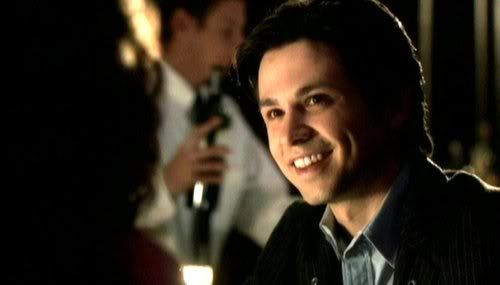
God, he's gorgeous. (He's even more gorgeous when he smiles.) I swear, when Freddie Rodríguez doesn't have a beard he is one of the cutest people ever. He was the best thing that ever happened to Ugly Betty and Grindhouse.

Though I have to say Rico lost a few cosmic bonus points when he waxed a little homophobic when David came out to him -- but then he was really nice to David and considered him family. I wonder if the show will explore that aspect of their relationship more or just leave it that...curious minds want to know.

But yeah. Lots of love for Rico - the bit about the baby episode had me close to tears a few times. He needs more screen time!

Thursday, September 16, 2010

Hot Women in Science Fiction

I usually prefer to see a character through her end before I put her on the Hot Women list, so it's a testament to her strength of character that I'm putting Pa'u Zotoh Zhaan from Farscape on the list -- even though I've only seen five episodes.


It was the episode "Throne for a Loss" that made me fall in love with her. She's a very capable woman - a strong woman, even though a captured warrior mistakes her as weak because of her compassion - because she tries to help him instead of assaulting him. Because she values him as an individual instead of perceiving him as an Other, as an enemy, someone to be scorned and forgotten.

But it's not just because of her goodness that she is strong - when he metaphorically spits in her face, she tells him, warns him, that she could rip him apart and that she would probably enjoy doing so - yet she does not.

And that is beautiful.

Another reason that I believe she is worthy of the list is because of her perception of the human body, of sexuality. She enjoys her body, she respects her body, and she is not afraid to express her beauty. When the prisoner in the aforementioned episode attempted to intimidate her by showing her his genitals, she was not fazed, but wondered if he had been taught to be ashamed of his nakedness, to treat it so. And then, as he had revealed his nakedness to her, she revealed hers to him.

It was very striking.

And of course, this sort of attitude had been threaded throughout the earlier episodes -- but it was in this episode that it was most strongly portrayed.

There was also the episode where they had the obligatory Don't Kill Aliens Just Because You Think They're Just Bugs -- bugs have personhoods too! And when Crichton was muses upon his new life and how to become accustomed to it she says:

Zhaan: Time and patience.

John: "Time and patience." Is that your answer for everything? [. . .] So who lives and dies in your world? Is it as arbitrary as it is in mine?

Zhaan: The answer is reverence for all living beings. Which may come with -

John: - time and patience.


And that is beautiful and it also reminds me of Vonnegut's philosophy, the one that people should love whoever is around to be loved. That's why I like Zhaan so much: she just sort of conceptualizes that.

Saturday, July 17, 2010

Hot Men in Science Fiction (Vaguely Spoilerish)

Sam Tyler from Life on Mars (BBC)


In one of my English classes, we talked about something called cultural estrangement, which is, in a nutshell, what happens to civilized people when stuck in uncivilized places. A good example of this is Heart of Darkness, "Outpost of Progress," Lord of the Flies etc. It explores what makes a person really human -- science fiction actually provides a lot of tropes to explore this idea of humanity in inhuman situations, and Life on Mars explores it with Sam Tyler.

1973 was a different world than the 21st century. Women and minorities weren't treated like individuals, civil rights were disregarded as seen fit, etc. Yet, Sam Tyler is always fighting against this. In 1973, he's placed in a position where he could give in to his baser, darker instincts and probably not suffer any sort of negative consequences. After all, he'd just be going with the flow, doing what everybody else does. Instead, he sticks up for what's right -- sometimes to his humiliation (honestly, I've never seen a protagonist physically put down so often in a single series) and usually to his slight alienation from the rest of the team. He's one of those rare human beings who struggles to say no, to do the right thing, while, at the same time, he's not unrealistically (and annoyingly) good. He's human - intensely so. He doesn't assimilate well to 1973, he encounters his breaking points in a realistic and utterly believable fashion, and he makes mistakes. I honestly believe that the character of Sam Tyler was (is?) one of the most intensely human characters I've ever encountered in fiction. It's beautiful and painful and exquisite all at the same time.

I liked the way they played with the time travel aspect of it (even though it was revealed to be more dream than weird funky time travel, which honestly put me off so it's a good thing it was only of secondary importance) -- a lot of times, shows will have a time travel episode and people just seem to assimilate naturally - or when the few times they do something not quite timeworthy, they're moments of comic relief instead of moments of any real significance. But Simm, as Tyler, played the timey-wimey aspects of this situation beautifully and significantly.

Gorgeous. Absolutely Gorgeous.

And just for the pure hilarity of it (no spoilers, just an opening for an episode in series 2):

Friday, July 2, 2010

Doctor Who: Fairy Tale From Space

I said at the end of the previous episode that I was going to be waiting for the Duckless Duck Ponds to appear.

And I think they did.

After all - in the first episode, the Doctor asks how Amy can know it's a duck pond if there are no ducks in them. And yet - Amy knows of the Doctor's existence even though there is no Doctor.

Beautiful really - the way the whole thing has been set up since the beginning - including the revisitation of my favorite scene from "Flesh and Stone" or how, even in that episode, the Doctor knew that a complicated time-space event such as himself would shut up the crack - and what does he do but go hurtling into the heart of the exploding TARDIS like a big damn hero.

This was a really big episode - I have so much to say that I'm not really quite sure where to begin exactly.

Fairy Tale or Science Fiction

I read an excellent blog entry the other day that really resonated with me (basically, the author concludes that Doctor Who is "A good fairytale"). And I agree - to a certain extent.

I've always considered Science Fiction to be an exploration of the soul - and I believe that Doctor Who, especially this season, has been all about that.

Except. There is one small problem with my definition of Science Fiction and that is that measure of quality should apply to all fiction, regardless of genre. I believe that Science Fiction is deeply more introspective than the typical fairy tale (not necessarily revisions of said fairy tales which, I think, is a sub genre all on its own but I could be wrong) - and I believe that Doctor Who fulfills this criteria as well. However, an introspective nature is not enough to make science fiction Science Fiction -- I think that a presence of technology is necessary to make science fiction SF, integral to the revelation of the human condition. To borrow the blog author's comparison, in BSG we have the idea of humanity presented in mechanic parts vs. organic parts, in The Moon is a Harsh Mistress we have the human condition acting out a what if question on the moon; in A Space Odyssey a mysterious obelisk provides commentary and a vision of humanity (along with some Romantic themes thrown in for good measure) -- when I was considering this, I realized that sure, Doctor Who's got a TARDIS and a nifty Golex sonic screwdriver, but technology doesn't often play a crucial role, or not as big a role as the stories listed above.

But the element is still there - the most striking of which was in "The Eleventh Hour" when the Doctor saved the day not with the usual futuristic what-if-we-had-this-sort-of-technology, but with technology we have right now. With a cellphone. A computer. The internet. This realization came to me in the shower - and it floored me.

We are really quite advanced -- we could do so much good -- we could be so magnificent.

More technology appeared in the second episode (along with a nursery rhyme - I love the folklore that threads its way through this series, absolutely glorious). A space ship exploiting a space whale - the relevance of this simple imagery is staggering and can be applied not only environmentally but to all sorts of things (humans exploiting nature, humans exploiting humans, and so on).

And those are the two major premises - I'm not counting Bracewell because - fairy tale.

So - what's my point? I think this series of Doctor Who is something new - I think it's both fairy tale and science fiction.

And honestly, I think that's what appeals to me so, so, so incredibly much with this Season of Doctor Who. It's Different. It's New.

(It's Blue.)

Fairy Tale Elements I Really Really Really Liked

Almost too obviously...


Rory. The boy who waited. And not even as a real boy - but as a plastic thing-gummy with delusions of humanity.

Oh Rory. My poor little Pinocchio given life by a good fairy. But Amy's better than any blue fairy, isn't she. Yeah.


Amy crying over the journal-Tardis was so evocative of Rapunzel for me. In the non-watered down tale, Rapunzel is cast from the tower and eventually finds her poor blinded Prince -- and Amy's "prince," Rory, is blind along with almost the entire Universe. They don't remember the Doctor. They don't realize how incredibly huge and fantastic and big the Universe really is. They don't really see.

And she weeps on that TARDIS, the air shakes with the sound of the universe and -- Rory remembers the Doctor. The wedding guests see that her imaginary friend was real and whole and brought back from memory into flesh.

Beautiful.

I liked the tweaked Creation Myth too:

River:The TARDIS is still burning - it's exploding at every point in history - if you threw the Pandorica into the explosion right into the heart of the fire - then let there be light.


I especially liked the juxtaposition of this idea of Judeo-Christian imagery with the idea of the Big Bang -- very cool.

Riversong


Dalek: Records indicate you will show mercy. You are an associate of the Doctor's.

River: I'm Riversong. Check your records again.

Dalek: Mercy.

River: Say it again.

Dalek: Mercy.

River: One more time.

Dalek: Merrrcccyyyy!


My god, Riversong! Who are you? What would make a dalek beg for mercy? Answers, Moffat, answers!

River: Rule One: the Doctor lies.


Rule 2: Riversong lies.

She told Amy that nobody would remember the Doctor (Amy, of course, having a crack in time on her wall, makes her an exception) -- but why did River remember the Doctor? And more to the point, how did she get to earth in that time without her time-vortex manipulator?

Yeah. I think she's cool as hell -- possibly one of the coolest women in all of the space-time continuum -- but I do not trust her. One bit.

Memory/the Big Reset


Memory's more powerful than you think - and Amy Pond is not an ordinary girl -- grew up with a time crack in her wall, the universe pouring through her dreams every night.


I am not bothered that Amy was able to remember the Doctor back home. In fact, I believe that Moffat has been sleeping with some Vonnegut under his pillow. This idea of memory -- it reminds me so much of Tralfamadorian philosophy:

All moments, past, present, and future, always have existed, always will exist. The Tralfamadorians can look at all the different moments just the way we can look at a stretch of the Rocky Mountains, for instance. They can see how permanent all the moments are, and they can look at any moment that interests them. It is just an illusion we have here on Earth that one moment follows another one, like beads on a string, and once that moment is gone it is gone forever. - Kurt Vonnetgut, Slaughterhouse V


Moments of Amber.

To me, Amy remembering the Doctor back into existence is just an extension of this kind of philosophy, an abstract idea made flesh.

It also reminded me a lot of some of the Romantic or Modernist writers who believed that the mind - that memory - could recreate experiences (a la the Lime-Tree Bower my Prison and A Midsummer's Evening). Again, it seems Moffat's furthered this particular idea beyond the mind and into the universe.

Beautiful.

Meta Aspect


Funny -- I thought if you could hear me, I could hang on somehow. Silly, silly old Doctor. When you wake up, you'll have a mum and dad and you won't even remember me. Well, you'll remember me a little - I'll be a story in your head. That's okay. We're all stories in the end. Just make it a good one eh - 'cause it was you know - it was the best! The daft old man who stole a magic box and ran away - did I ever tell you that I stole it? Well I borrowed it, I was always gonna take it back. Oh that box, Amy - you'll dream about that box. It'll never leave you - big and little at the same time. Brand new and ancient and the bluest blue ever. And the times we had, eh? Will had. Never had. In your dreams, they'll still be there. The Doctor and Amy Pond and the days that never came. I don't belong here anymore. I think I'll skip the rest of the rewind - I hate repeats. Live well - love Rory. Bye bye, Pond.


This quote just about broke my heart as a writer. Wouldn't it be amazing and tragic if all those stories we want to tell, those stories bubbling and percolating and brewing, just waiting to come out - had really happened to us, and now they're only barely remembered, a dim shadow of what Could Have Been but will now Never Be?

Or even when Amy is remembering the Doctor:

There's someone missing - someone important, someone so, so important. Sorry, sorry everyone. But when I was a kid, I had an imaginary friend. The Raggedy Doctor - my raggedy doctor - but he wasn't imaginary. He was real. I remember you! I remember! I brought the others back, I can bring you home too! Raggedy man, I remember you and you are late for my wedding! I found you - I found you in words like you knew I would. That why's you told me the story - the brand new, ancient blue box! Oh, clever, very clever.


Words. Stories. Language. The most powerful things in the universe.

Remarkable Moments


I really loved the use of art in this series. I know they weren't like major plot points or anything - but with the Van Gough episode (especially because of the Van Gough episode), they just seemed so appropriate - added that little touch of Something.

I love how Amelia slurped her drink in front of the Dalek. So irreverent.

And speaking of the museum --


I really, really liked the Doctor's handwriting. Bold, forward, strong.

Doctor: Me from the future. I've got a future - that's nice!


I really like Moffat's dialogue.

Rory is magnificent:

Doctor: All of creation has just been wiped from the sky - do you know how many lives now have never happened, all the people who never lived? Your girlfriend isn't more important than the whole universe.

[Rory punches the Doctor]

Rory: She is to me!

Doctor: HAHA! Welcome back RORY WILLIAMS!


Doctor: Why do you have to be so ...human?

Rory: Because right now I'm not.


*wibble*


Something old. Something new. Something borrowed. Something blue.


I love how Moffat plays with these traditional, folklore-ish things -- it's so...I just would never have thought to compare the TARDIS in such a way. Brilliant.

And, as Amy is clambering over the table (loved that, btw) - is Rory saying that he was plastic? I think that's awesome because, even though it's a reset, it's not really a character reset which is the absolute worst.


Amy: You may absolutely, definitely kiss the bride.

Doctor: Amelia - from now on I shall be leaving the kissing to the brand new Mr. Pond.

Rory: No, I'm not Mr. Pond - that's not how it works.

Doctor: Yes it is.

Rory: Yeah it is.


Besides the nice little nod to "Vampires of Venice," hello Gender-Bender alert.

And:

Oy! Where are you off to - we haven't even had a snog in the shrubbery yet.


I really like that, even though Amy's married, it's not like she can't acknowledge her attraction to other men -- while still not pidgeoning that kind of attraction into a romantic, let's-be-married-forever-and-ever kind of relationship. As I said back in "Amy's Choice," I like the new perceptions of friendship and family that seem to be at work here.

Also, when Amy entered the TARDIS first without Rory, I was terrified for a moment that Rory wouldn't be coming with her but then there he was - and I clapped and cheered because finally! Finally! he seems to be an official companion - providing even more new aspects to the show (I know that Classic Who has had more than one companion on occasion, but, besides that brief stint with Mickey, New Who hasn't so much), which will be fascinating and interesting and utterly lovely.


Doctor: Sorry, something's come up - this will have to be goodbye.

Amy: Yeah I think it's goodbye - do you think it's goodbye?

Rory: Definitely goodbye.

Amy: GOODBYE!


To days to come...

Thursday, June 24, 2010

Doctor Who: Graffiting History One Cliff Face at a Time

I really, really liked that the beginning was about the episodes that seemed to have little to do with the Crack in the Skin of the Universe theme -- Vincent Van Gough, Bracewell and Churchill -- Liz 10, brilliant as always. And I'm the bloody queen.

What do they call that -- spunk?

And speaking of spunk -- and pure cheekiness -- what about Doctor Riversong?


(and what about that corset she was wearing when she stole the painting?)

I got a very Indiana Jones feel from her this time around -- only very much cooler. Seeing her in prison, putting micro-explosives in people's wines, not having an apparent qualm in purchasing a

A vortex manipulator - fresh off the wrist of a handsome time agent.


I'm pretty sure Riversong is a Slytherin -- if the Harry Potter 'verse and the Who-verse collided. But really! The poor Time Agent - I felt my latent desire to write fan fiction stir -- I need more time!

But what I really loved about this episode was its core theme of perception.

Even the hallucinogenic lipstick is all about perceptions - and I'm pretty sure I could add in some comment about how Riversong uses her sexuality to muddle things up a bit - but I love how she's so much more than that. A true adventurer.

But what about the big perception, the nice, juicy twist at the end of the episode.


I know last week I mentioned that there were rumors that the thing in the Pandorica was the Doctor because the way the Doctor described the thing inside seemed to be descriptive of the Doctor himself (or so people said).

I never really got that.

River: [The Pandorica] was built to contain the most feared thing in the Universe.

Doctor: And it's a fairy tale, a legend - it can't be real!

[. . .]

Doctor: If the Pandorica is here, it contains the mightiest warrior in history.

[. . .]

Doctor: There was a goblin or a trickster or a warrior - a nameless, terrible thing soaked in the blood of a billion galaxies. The most feared being in all the cosmos - and nothing could stop it or hold it or reason with it. One day it would just drop down out of the sky and tear down your world.

Amy: How'd it end up in there?

Doctor: oh you know fairy tales - a good wizard tricked it.


Maybe it's because I haven't watched Classic Who - but I don't really get that sort of vibe from the New Who Doctor. Except for the fact that he's a trickster - he after all tricked the Daleks by threatening to blow up the TARDIS with a pastry (seems a bit ironic now). But a warrior? A thing that destroys worlds? I mean, the Doctor does has blood on his hands - but he usually attempts to help them (unless they're just downright nasty like daleks) first (I'm thinking of 9's Slitheen, 11's attempt to keep the Vampire-Fish lady from throwing herself into the water, etc).

I think that "Amy's Choice" really hinted at the darker bits of the Doctor rather nicely - and I don't think it matches the description of what he thought was in the Pandorica. Or even the second episode with the space whale - how he said he'd have to change his name from "Doctor" -- and doctors are the opposite of warriors. Anyway, I wasn't expecting to find the Doctor inside - one way or the other. So the twist was really surprising and jaw dropping for me and omg wtf-ery -- especially because of how it's playing with this idea of perception.

The Doctor and who we might consider the "good guys" might not think that the Doctor is a blood-soaked warrior -- but the people on the losing side would be more inclined to paint him differently, especially if they've been manipulated by the person who keeps on saying "Silence Will Fall."

(I also like how the Doctor's perceptions of his enemies blinded him to figuring out why they weren't just attacking him outright -- because, though I really enjoyed his speech and all -- Guess who! -- and generally thought it was brilliant, there was just no way they wouldn't blast him off that rock unless they had ulterior motives -- and, since I was thinking of these people as the typical big bads -- and hoping against hope we wouldn't have another shoot out like seasons 1, 2, and 4 -- I also didn't think they'd be working together.)

This depiction of the Doctor in different roles seems to be another ongoing theme. Vincent being even more intense than the Doctor, the Doctor living a domestic life as a lodger (positively nightmare-ish), the so-called Dream Lord -- it continues here by putting the Doctor as the most feared man of the cosmos and positing the Big Bad of the Season as the good guy/wizard (from a purely character based point of view of course). Gods, I love this exploration of character!

So who's the Good Wizard that out-tricked the trickster?

(May I take this moment to point out that if the Writers-That-Be wanted John Simms to reprise his role as the Master it would have been better to have brought him back for this story line rather than that ridiculous-let's-pretend-it-didn't-exist two part Christmas special that was just absurd and not in a good way. Also? It would have added a bit more irony since Ten wanted to lock him up in the TARDIS, nice safe and out of the way, though not quite so dramatic a statement as the Pandorica.)

But I honestly have no idea who the "Good Wizard" might be. But then again, I try not to predict stories - I feel it's sort of like those people who try to finish your sentences and sometimes they get it right but it's just annoying (especially since predictions come with pre-conceptions which can sort of miss out what the story might be saying - but that's just my personal opinion).

I'm pretty sure the Good Wizard is the voice that says "Silence will fall" - but then I'm not really sure why he's using the usual bad guys to lock the Doctor up safely out the way. They're doing it to save the universe from the cracks (some of which have silence on the other side from the vampire-fish-from-space episode), so why does he say that silence will fall in such a confident, prophetic manner unless he's using the cracks to manipulate the Daleks, Cybermen, and everybody else in order to gain other ends? If he knows that Riversong threw a stick in master scheme to keep the TARDIS from going kaplooie then why wouldn't he let her out if his intention was to stop the cracks and therefore the silence? I'm hoping this means there's going to be even more complexities to this already complex season. =}

Speaking of fairy tales -- the Pandorica, Amelia Pond, whose name is just a bit fairy tale -- perhaps the next episode will address duckless duck ponds?

And speaking of Amy - the perception of memory? And the return of --


RORY!

*Happy dance of glee!*

I had seen his name on IMDB before the first episode - but I had honestly thought he'd just return as a flashback of some sort.

I was so, so happy because I love Rory and his presence was more than I had expected.

I loved how it was a unpredictable reaction to his re-appearance both from the Doctor and from Amy.

Doctor: Romans! Good, I was just wishing for Romans. Good old River. How many?

Rory: 50 men up top, volunteers.

Doctor: 50 -- not exactly a legion.

Rory: your friend was very persuasive - but uh, it's a tough sell.

Doctor: Yes I know that Rory I'm not exactly one to miss the obvious but we need everything we can get. Okay! Cyberweapons! This is basically a sentry box - the headless wonder here was a century. Probably got himself duffed up by the locals - never underestimate a celt.

Rory: Doctor -

Doctor: Hush Rory -- thinking -- but leave a cyberman on guard unless its a cyberthing in the box but why lock up one of their own okay no not a cyber thing but what, what -- noooo missing something obvious Rory, something big something right slap in front of me -- I can feel it.

Rory: yeah I think you probably are.

Doctor: I'll get it in a minute. [pokes Rory] Hello again.

Rory: Hello

Doctor: How've you been?

Rory: Good. I mean, Roman.

Doctor: Rory! I'm not trying to be rude - but you died.

Rory: Yeah I know I was there.

Doctor: you died and you were erased from time you didn't just die you were never born at all you never - existed!

Rory: Erased, what does that mean?

Doctor: how can you be here?

Rory: Well -- I don't know. It's kind of fuzzy - well, I died and turned into a Roman - it's very distracting.


And then, and then - this heartbreaking explanation the Doctor provides Rory for his existence:

The universe is big - it's vast and complicated and ridiculous and sometimes, very rare, impossible things just happen and we call them miracles. and that's a theory - in nine hundred years never seen one yet. but this would do me.


And it's not miraculous at all - it's just heartbreaking and sad and tragic because Rory's an Auton - a "thing" as he called it -- oh my god, poor Rory.

It makes this end even more tragic because there's no clapping of the hands and a sweet I do believe I'm human, I do, I do like there was with Bracewell.


Crying out, I'm Rory, I'm Rory! isn't enough - it just isn't. Amy remembering him isn't enough. The ring isn't enough.

Oh my poor Rory (is it just me, or are the companions having a rougher time than usual this season? Not that I mind, it's just so incredibly sad in a good way).

Other Remarkable Moments (though the whole episode was pretty much remarkable)


So he's seen the fragment of TARDIS, he's seen the painting - and he's still so excited to go poke something unknown and weird with a stick. I love it, I love his child like wonder...(I think Wordsworth would approve...)


I loved the way the Doctor used his hands in this episode - the thumbs up to danger, the exaggerated hand movement when he whispered to Rory, "how are you here," the multiple times he bopped his head with his sonic screwdriver. I really think the emotional tone they hit here with his body language and physical dialogue was just right -- the music when they dragged him to the Pandorica, his intense pleading (that didn't sound desperate or weak) combined with his tangible fear -- very good (and I liked they focused more on the less predictable emotions that would have been involved).

Amy: Oh I know. My favorite topic in school. Invasion of the Hot Italians. Yeah, I think I got marked down for the title.


As a future English teacher, I want to say that I wouldn't have marked her down for it (if the essay itself was good) but on the other hand, I could see why they would have marked her down for it...bloody school! Sucking all the fun out of everything. ;)

Doctor: That's a memory. Friend of mine, someone I lost. Would you -- mind? People fall out of the world sometimes, but they always leave traces. Little things we can't quite account for: faces in photographs, luggage, half eaten meals -- rings. Nothing is ever forgotten not completely and if something can be remembered - it can come back.


More on the perception thing - very nice.

When you fight barbarians what must they think of you? Where do they think you come from? Where do I come from? Your world has visitors. You're all barbarians now. A fool would say the work of the gods - but you've been a soldier too long to believe there are gods watching over us.


I don't want to beat my hobby horse too much - but I do like this quote an awful lot.

Yeah it's just like being an organ donor only you're alive and sort of... screaming


Also? The Cybermen reached a new level of creepiness - my skin crawled when the face split down the middle, and then it crawled even more when it flapped it's little metal face-cupboards at Amy -- *shiver*

Rory, I'm sorry but you're going to have to be very brave now.


*sniffle sniffle*


Still -- if the Pandorica is a play on Pandora's Box - then, though Amy referred to it as holding all the "worst things in the world," there really was only one thing left in it when it was closed again -- Hope.

Oh, the different perceptions of Pandora's Box combined with the different perceptions of Doctor Who is very interesting.

Friday, June 18, 2010

Doctor Who: Triumph of the Sopha Man

First, the preliminaries:

1. I loved this episode because I thought Matt Smith was brilliant in it.
2. I hated this episode from a writerly perspective.

Spoilers beneath the fold:


The Mere Devices
  • The Ear Piece.

So the episode opens with the TARDIS taking off without the Doctor. Awesome. Because what and who is the Doctor without the TARDIS - an idea that was kinda/sorta addressed in Blink but again the story wasn't really about the Doctor being without the TARDIS - and I believe that this would have been an interesting episode in which to develop that relationship more. Or am I just crazy for wanting that?

The audience is given hints that the Doctor is a bit off -- not just his delightfully bizarre behavior when he shows up as the Lodger, but in his apparent identity crisis:

I'm the Doctor. Well, they call me the Doctor. Don't know why. I call me the Doctor too. [pause] Still don't know why.


or even

Call me the rotmeister. No I'm the Doctor don't call me the rotmeister.


and then an almost overzealous affirmation of his identity, as if he has to convince himself who he is:

Football player: We're going to annihilate them!

Doctor: Annihilate - no, no violence do you understand me not when I'm around not today not ever I'm the Doctor the oncoming storm and you basically meant beat them in a football match didn't you?


(Though I also think that last bit served dual purposes: poking a bit of fun at the life and death world in constant peril theme that weaves into the Doctor Who mythos -- showed up even in "The Lodger" because if he touched the thingamabob the solar system would go kaplooie; but I still think it also reveals a driving need to somehow reaffirm to himself that he is the Doctor.)

In my mind, this would be an interesting concept: TARDIS gone. Without the TARDIS, how can he be the Doctor? What about Amy? Oh my gods, how will he ever live his life again - will he be confined to a life of domesticity (as seen in "Amy's Choice") - a life which he described as a "nightmare?"

Instead, all that danger and tension is removed because of this:


This. Really. Irritated. Me.

Where did he get it? He tells Amy not to wreck his "new earpiece" - but where did he get it? And, more importantly, why did he have to have a new ear piece. It removes so much of the Danger aspect this episode had the potential to have. I felt cheated.

Instead of being completely separated from the TARDIS and Amy, he's still got a tenuous connection - which just...I mean, we already know it's going to work out alright in the end - why not just go all out and play with the idea of the Doctor being TARDISless for a while?

  • The Non-technology Technology.


It's art! A statement on modern society! Oo! Ain't modern society awful.


(Despite my comments below, watching the Doctor do mad science with his suspenders looped off and wrists cuffs rolled up was very...nice in an oddly, adorkable, attractive sort of way.)

But that said - I just honestly didn't get the point of this contraption. No traces of technology, all too normal -- and then there's a wanna-be-tardis on the roof. Even if the sensor was boggled with the Perception Filter (or the Doctor's ability to read it right)...I don't know, it just seemed like an excuse to get Amy to look at the plans of the house (which sounded so Supernatural to me). Which isn't bad in and of itself - plot basically consists of cause and effect - but this felt a bit too...cheap to me.

  • The Psychic Connections


(Kitty!!)

The Doctor was able to pull a Spock on Reinette, but being able to talk to cats? Has he ever talked to animals before (I haven't seen Classic Who so honestly don't know if it's truly out of character)? It's like the writers said, Oh the Doctor needs to find out that people go in but they never come out and since he hasn't observed this for himself we'll just have the cat tell him.

Uh huh.

Yeah, that really...no.

Personally, I think it would have been cooler and slightly more terrifying to have the people go upstairs-that's-not-upstairs for a spot of tea - the Doctor says hello, the rot grows, and then they never come down. Because then the audience would have been shown that and experience it with the Doctor instead of knowing what he doesn't know, precipitating the boring reading of the cat's mind scene to catch him up with the audience.

It's not that I don't like knowing something the protagonist doesn't know - I just find it boring when the character has to be "caught up" in a scene with a character telling another character what the audience already knows like a walking, talking billboard. It's not too bad when there's a Big Reveal about something the audience knew when there are different character dynamics at stake - intrigues and desires and so on and so forth.

But this was a cat.

It peeved me.

Plottable Inconsistencies

  • What's in the Second Floor?

So, at the beginning of the episode, they thought they were on some moon or other. Then the TARDIS leaves the Doctor behind. Then somehow he knows that there's something stopping the TARDIS and that it's upstairs in that flat. But how does he figure all that out? Did he talk Amy through it with the ear piece? If so, why couldn't the audience have seen that too?

(I am aware that I watched this all hodgepodge and that I'm writing this review days after I've seen it instead of hours -- so I probably missed something -- enlighten me?)

  • The Psychic Connection (again)

Reinette: intimate.
Kitty: sweet.
Craig: violent.

Wha?

The Theme

Earlier on the episode we have a scene that is a reprisal of the Being Best of Humanity scene in "The Hungry Earth" but only on a much smaller, but still relevant scale:


Doctor: Well perhaps that you then - perhaps you'll just have to stay here secure and a little bit miserable till the day you drop. Better than trying and failing eh?

Sophie: You think I failed.

Doctor: Oh everybody's got dreams, Sophie. Very few are going to achieve them so why pretend. Perhaps, in the whole wide universe, a call center is about where you should be.

Sophie: Why are you saying that -- that's horrible!

Doctor: Is it true?

Sophie: Of course it isn't true, I'm not staying in a call center all my life, I can do anything I want.

Doctor: It's a big old world, Sophie - work out what's really keeping you here, eh?


Perhaps, simply because of where I am in life right now, I really, really liked this little speech -- even if it was slightly cheesy (but I like cheese, so).

Earlier, we had this exchange between the Doctor and Craig after Craig said he wasn't much of a traveler:

I can tell from your sofa -- you're starting to look like it.


With just the tiniest bit of disapproval - of course, Craig and the Doctor are polar opposites: one travels the whole of space and time, and the other can't even see the point of London. Or Paris. Or anywhere without Sophie (which really, really irritates me -- he'd rather be a sofa than actually do something with his life -- to live it to its fullest potential).

And then he saves the day because he is "Mr. Sofa Man" - even after being inside the Doctor's head. An entire universe and not one bit of him wants to go and be magnificent? Not only that but Sophie -- the girl who was going to do something with her life -- decides to stay, give up her dreams (because she helped turn off the machine, meaning she no longer wanted to stay) because Craig loves her.

I hate that idea. Again - it may be just because I'm in a particularly bad spot with my own relationship and it's coloring my interpretation -- but still. It rubs me the wrong way. And even though Craig said that he could see the point of Paris with Sophie -- I don't know. Maybe I'm overreacting.

The Problem with Amy

And no - not referring to the widening of the crack because of her ring. She had like - nothing to do in this episode. She was just -- there. Would have been much more exciting if, in the same way the Doctor had to deal with being without the TARDIS, she had to deal with learning how to fly the TARDIS.

Oh god. I cannot believe I am about to say this considering how much I really disliked Rose as a character but --

Rose looked into the heart of the TARDIS. And then she flew that thing right back to the Doctor. Amy, on the other hand, is so much more amazing than Rose (imo) - and what does the audience get? Just her pulling the zig zag thing, generally telling the Doctor to hurry it up, and just being there. In the background. All static and boring. With the obligatory necessary piece of info towards the end, of course. No character development at all.

And towards the end, she asks the Doctor why he can't find her a fella - right after she told Van Gough that she wasn't the marrying type. Though it does solidify her relationship with the Doctor as a nonsexual, nonromantic one - which is nice.

The Good Bits

But, divorcing myself from the structural aspects of the story, I really did like this one.

For example, I liked that they continued the theme of putting the Doctor out of his element, which they also did in "Vincent and the Doctor."

I love the Doctor's absolute cluelessness:

Less of a young professional more of an -- ancient...amateur. But frankly, I'm an absolute dream.

Have some rent. That's probably quite a lot, isn't it. Looks like a lot. Is it a lot? I can never tell. Don't spend it all on sweets, unless you like sweets. I like sweets.

My room? Oh yes, my room. My room. Take me to my room.


I believe this sort of thing enhances his alien-ness. Really, really well done. And not only his alienness, but they're also emphasizing more the fact that he's a Time Lord, which I don't recall being mentioned so often as it has been here:


Craig: Where did you learn to cook?

Doctor: Paris in the 18th century. No hang on. That's nto recent is it. 17th? No no no 20th. Sorry, I'm not used to doing them in the right order.

Craig: Has anybody ever told you you're a bit weird?

Doctor: They never really stop.


It just seems more time-lordy to me when they address the fact that he does experience time differently - which has been mentioned before, but never in such small, everyday ways (like the bit with Van Gough when he muses on how time passes normally...really slowly). It's just nice to have the different perspective on what we earthlings would consider normal. Makes him more three dimensional.

As always, I like how they continue to portray sexuality in the show:

Craig: [when Craig told the Doctor to shout] in case you'd want to bring someone round, a girlfriend or ... boyfriend...

Doctor: Oh I will - I'll shout if that happens.


They touched on this when he was 9 with Captain Jack (when Rose thought she should distract the guard when he was actually not into girls at all -- bit of a commentary on society's assumed hetero-as-the-norm perspectives) - but it was nice to see that it wasn't portrayed as weird or abnormal, sort of like how it is in Caprica. The Doctor doesn't care - he's more concerned with the shouting bit...and totally misunderstanding this earthly custom of which Craig is speaking.

And while I'm on the subject of sexuality, what about gender?


You know, usually it's women who are portrayed as those who nurse people back to health -- but here we have the Doctor doctoring and being heroic when those are roles usually reserved for two different people - one who is considered masculine and the other feminine. Really complicates and three dimensionalizes the Doctor as a person/character.

I love how smiley and child-like he was when he was jumping on the bed. :)


I think that 11 misses the brainy specs - first goggles, then snazzy shades that could see body heat, now this? Definitely.


Hello. Oops. Sorry. Don't worry I wasn't listening...just reconnecting all the elctrodes - it's a real mess. Where's the on switch for this?


Ah, 11, socially clueless as ever. =)


And the hair - the crazy hair, the madcap hair!

Yes. I did love Matt Smith's performance. I did fall even deeper in love with 11 than I had been before -- even though I still think it would be cooler if certain aspects of his character had been explored with more nuance and subtlety.

Which leaves me with the Perception Filter.

I didn't put it with the Plot Devices because I don't think it is one -- it does appear to be the recurring theme though, and I'm hoping that the finale episodes coming up will have something to do with perception, how people see things, that sort of thing.

All your life you live so close to truth it becomes a permanent blur in the corner of your eye. And when something nudges it into outline, it's like being ambushed by a grotesque. -- Rosencrantz and Guildenstern are Dead


I've heard the speculation that, in the preview for the Pandorica, that the person the Doctor is describing is actually the Doctor -- which I'm not sure how I feel about that. I hope it's something a bit more complex than that - because in "Amy's Choice" we already got to see the Doctor's darker self -- hoping for something a bit new, more in the corner of your eye sort of thing.